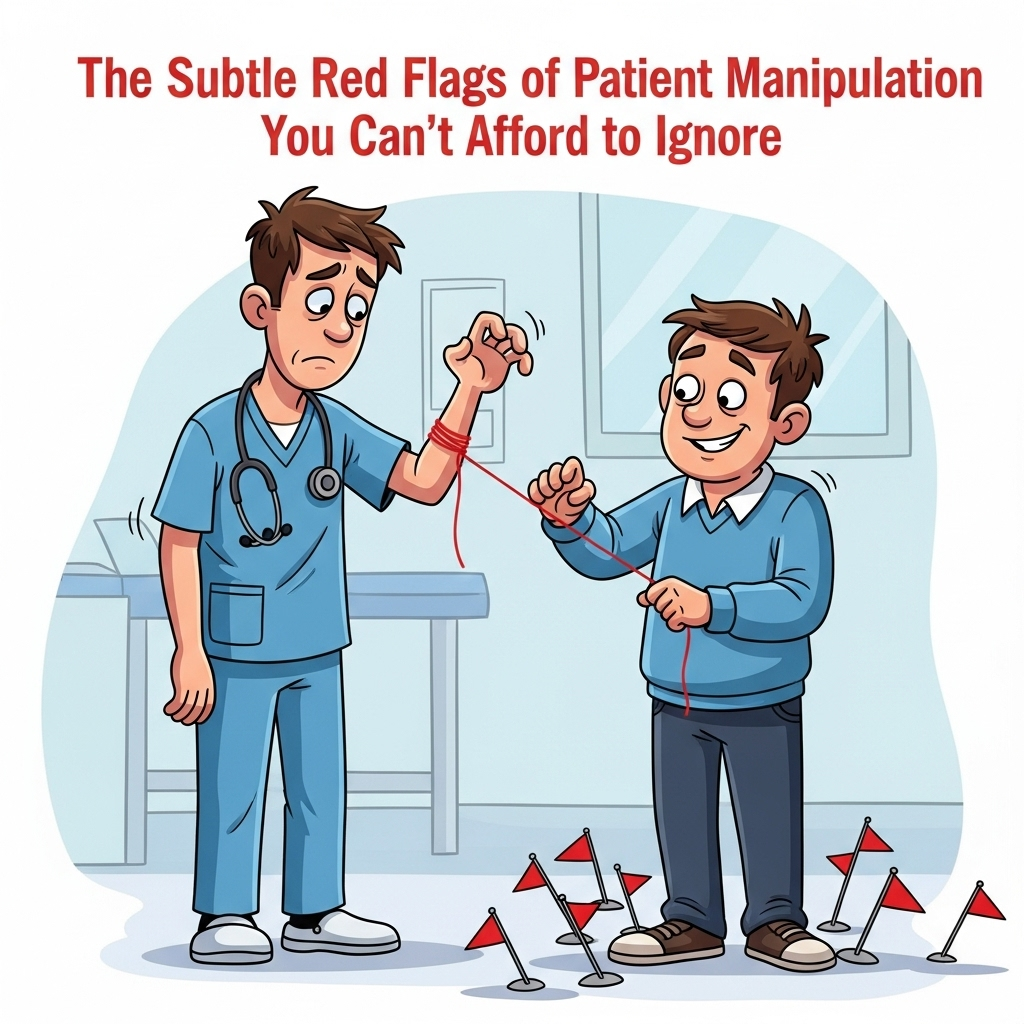
The Subtle Red Flags of Patient Manipulation You Can’t Afford to Ignore

Doug Jorgensen
May 9, 2025
Not every patient walks into your office with honest intentions. Some want legitimate care—but also want to bend the rules to get what they really came for. Others are there solely to exploit your prescribing authority, your professional reputation, or your goodwill.
The challenge? The most dangerous manipulations aren’t the obvious ones—they’re the subtle cues that, if ignored, can lead to compliance violations, legal trouble, or even the loss of your license.
Why Manipulation Works in Medicine
We’re trained to help. We want to believe our patients. And when someone is in distress—or presents themselves as a victim—it’s human nature to empathize. Unfortunately, some individuals know exactly how to leverage that instinct to get what they want.
Subtle Red Flags to Watch For
1. Flattery with a Purpose
- Excessive compliments about your skill, appearance, or how you “really listen” to them—especially when paired with a request for something outside normal protocol.
2. Creating Urgency
- “I can’t wait another day for this prescription.”
- “I’ll lose my job if I don’t get this letter today.”
- Urgency is often manufactured to bypass your safeguards.
3. Discrediting Other Providers
- Dismissing past clinicians as incompetent, uncaring, or corrupt—setting you up to be “the only one who understands.”
4. Over-Sharing Personal Details
- Sharing unrelated intimate or traumatic details early in the relationship to create sympathy and emotional leverage.
5. Testing Boundaries
- Pushing for exceptions—refusing a chaperone, requesting off-the-record advice, or asking you to “just make an exception this once.”
The Cost of Missing These Signs
Overlooking subtle manipulation can result in:
- Compliance Violations – Prescribing outside guidelines or without proper documentation.
- Legal Risk – Allegations of misconduct, especially in sensitive exam situations.
- Reputation Damage – Once trust is broken, word spreads fast—often faster than the truth.
Protecting Yourself Without Losing Compassion
- Stick to Protocols – If it’s in your policy, follow it every time.
- Document Everything – If an interaction feels off, make a note in the chart.
- Use a Witness – For sensitive conversations or exams, have a staff member present.
- Pause Before Acting – If you feel pressured, step away, review the case, and revisit the decision later.
A Case I’ll Never Forget
Years ago, I was consulted on a patient who presented with escalating pain and an elaborate backstory. She had a way of making every provider feel like they were her last hope. After two visits, my instincts told me something didn’t add up. A quick review of her prescription monitoring profile revealed multiple active opioid prescriptions from several providers. By following that red flag, we prevented further diversion and potential harm.
Bottom Line
Manipulation in medicine is real, and it’s often subtle. Recognizing it doesn’t make you cynical—it makes you a safer, more effective clinician.
Trust is earned. Verify first, then decide.
About the Author
Douglas J. Jorgensen, DO, CPC, FAAO, FACOFP
Dr. Doug is a physician, consultant, and national educator on medical documentation accuracy, patient engagement, and compliance strategy. He helps healthcare organizations develop systems that make patients active partners in their own medical records.