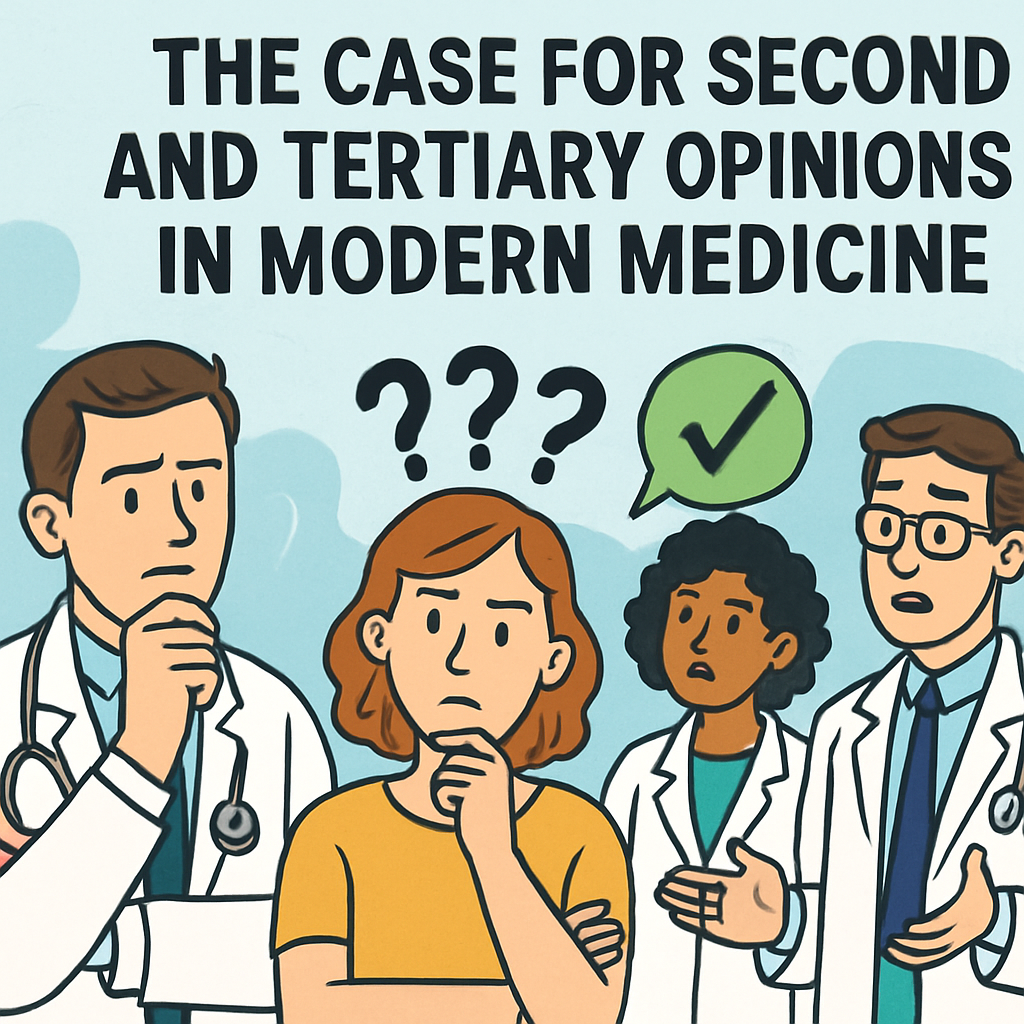
The Case for Second and Tertiary Opinions in Modern Medicine

Doug Jorgensen
May 7, 2025
In an era of advanced diagnostics, AI-assisted imaging, and near-instant access to research, it’s tempting to believe the first opinion you get will be the right one. But the truth is, medicine is as much art as science. Two equally qualified providers can look at the same patient, the same tests, and the same history—and reach different conclusions. That’s why second and even tertiary opinions are not just valuable—they’re essential.
I’ve built much of my consulting work on reviewing other providers’ cases, and I’ve seen firsthand how dramatically a second opinion can change the course of care. In some cases, it prevents unnecessary surgery. In others, it uncovers a missed diagnosis that’s been hiding in plain sight for months or even years. Sometimes it simply confirms the original plan, giving the patient the confidence to move forward.
Why Second Opinions Matter
- Diagnostic Accuracy – Medicine is full of “zebras”—rare conditions easily mistaken for something common. Fresh eyes can spot them.
- Bias Reduction – We all carry cognitive biases. A second provider brings a new lens and fewer preconceived notions.
- Treatment Validation – Confirms whether the recommended course is truly evidence-based and in the patient’s best interest.
- Patient Empowerment – Patients feel more in control when they know their options have been fully explored.
When to Seek a Second or Tertiary Opinion
While any patient has the right to seek another opinion at any time, there are moments when it should be strongly encouraged:
- Life-Altering Diagnoses – Cancer, major organ failure, severe autoimmune disease.
- High-Risk Procedures – Spinal surgery, joint replacement, organ transplant.
- Chronic Unresolved Symptoms – When months of treatment yield no improvement.
- Conflicting Information – When providers disagree on diagnosis or treatment.
- Patient Discomfort – If they feel rushed, dismissed, or unsure about their care plan.
The Provider’s Role in Encouraging Multiple Opinions
Some clinicians take offense when a patient asks for another perspective. That’s a mistake. A confident provider should:
- Welcome outside input and facilitate the process.
- Provide copies of records, test results, and imaging promptly.
- Recommend reputable specialists with relevant expertise.
- Follow up with the patient after they’ve gathered additional input.
A Story That Stuck With Me
I once consulted on a patient who had been told they needed immediate surgery for a spinal condition. The imaging did show pathology—but not the kind that matched their pending procedure. I sent them for a second opinion at a top regional spine center. The verdict? No surgery required, just targeted physical therapy. Two years later, they’re still symptom-free and grateful they didn’t rush into the operating room.
The Bottom Line
Multiple opinions aren’t a sign of weakness in medicine—they’re a safeguard. They protect patients from unnecessary risk, reduce the likelihood of error, and strengthen trust between provider and patient.
The best care often comes from collaboration, not competition. When in doubt, get the extra set of eyes—and sometimes, the third.
If you’re a patient, advocate for yourself. If you’re a provider, encourage your patients to do the same. In the long run, a second or tertiary opinion isn’t just good medicine—it’s good ethics.
About the Author
Douglas J. Jorgensen, DO, CPC, FAAO, FACOFP
Dr. Doug is a physician, consultant, and national educator on medical documentation accuracy, patient engagement, and compliance strategy. He helps healthcare organizations develop systems that make patients active partners in their own medical records.