From 3×5 Cards to Click Boxes: How Documentation Changed Healthcare Forever

Doug Jorgensen
April 25, 2025
Introduction: A Journey From Pen and Paper to Pixels
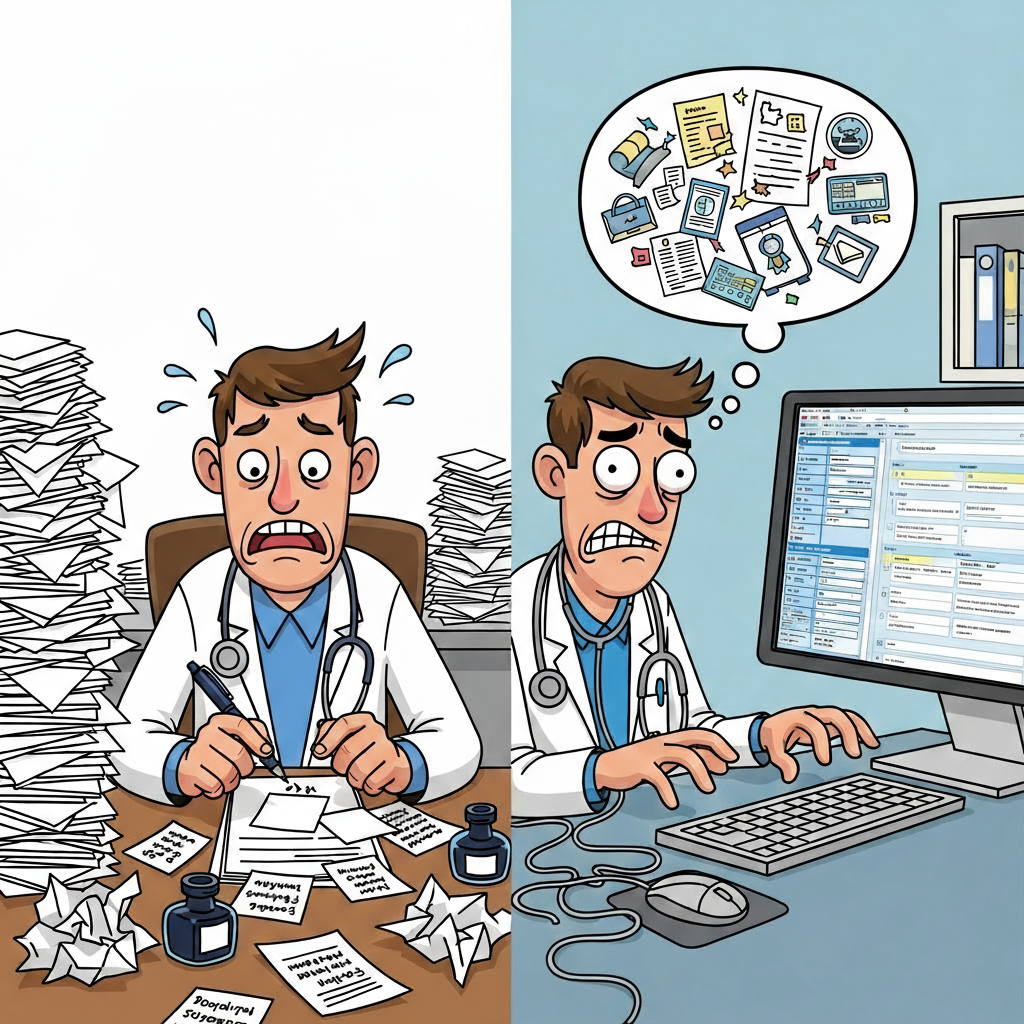
When I began practicing medicine, documentation fit on a 3×5 index card–literally. “Old records” were handed to me in a bundle of rubberband-bound, coffee stained, index cards..
We wrote what mattered: the history, the exam findings, the assessment, and the plan—nothing more, nothing less.
Today, the same encounter may take dozens of clicks and multiple screens to record.
The evolution of documentation hasn’t just changed how we write notes—it’s transformed how we practice medicine.
Step 1: The Simplicity of Paper
Back then:
- Documentation was quick, straightforward, and in the physician’s voice.
- The purpose was clinical clarity, not legal defense or payer compliance.
- You spent more time with the patient and less time recording the encounter.
Step 2: The Rise of Electronic Health Records (EHRs)
EHRs promised:
- Better organization of patient information.
- Improved communication between providers.
- Easier access to records across systems.
And yes, they delivered in some ways—but they also introduced:
- Template-driven documentation that can strip away nuance.
- Increased administrative burden.
- A shift from patient-centered interaction to screen-centered interaction.
Step 3: How Payers Reshaped Documentation
With third-party payers came:
- Coding and compliance requirements dictating what must be included.
- Notes expanded not because the patient needed more detail, but because the payer required more detail.
- The focus shifted from what is clinically relevant to what is reimbursable.
Step 4: The Good, The Bad, and The Necessary
The Good:
- Centralized records improve continuity of care.
- Easier retrieval of past labs, imaging, and consult notes.
The Bad:
- “Click fatigue” and burnout from excessive documentation requirements.
- The patient’s story often gets lost in boilerplate text.
The Necessary:
- Understanding that payers, regulators, and lawyers now read our notes as much as other doctors do.
- Accepting that compliance and protection are part of modern clinical documentation.
Step 5: Finding the Balance
- Keep the clinically important details in your own words, even when using templates.
- Use technology to support care, not replace your clinical voice.
- Advocate for EHR improvements that put patient care first.
Common Mistakes to Avoid
- Letting templates dictate the entire note without customization.
- Copying forward outdated information without verifying accuracy.
- Viewing documentation purely as a billing requirement instead of a clinical tool.
Final Thoughts: The Doctor’s Voice Still Matters
The technology has changed, but the core purpose of documentation remains:
to clearly communicate the patient’s story, your assessment, and your plan.
In the shift from cards to clicks, don’t let the technology erase your clinical judgment or your humanity.
About the Author
Douglas J. Jorgensen, DO, CPC, FAAO, FACOFP
Dr. Doug is a physician, consultant, and national educator on healthcare compliance, documentation integrity, and EHR optimization. He helps providers adapt to modern documentation demands without losing sight of patient care.