Creating a Comprehensive Controlled Substance Compliance Policy

Doug Jorgensen
April 25, 2025
Introduction: Your Compliance Program’s Blueprint
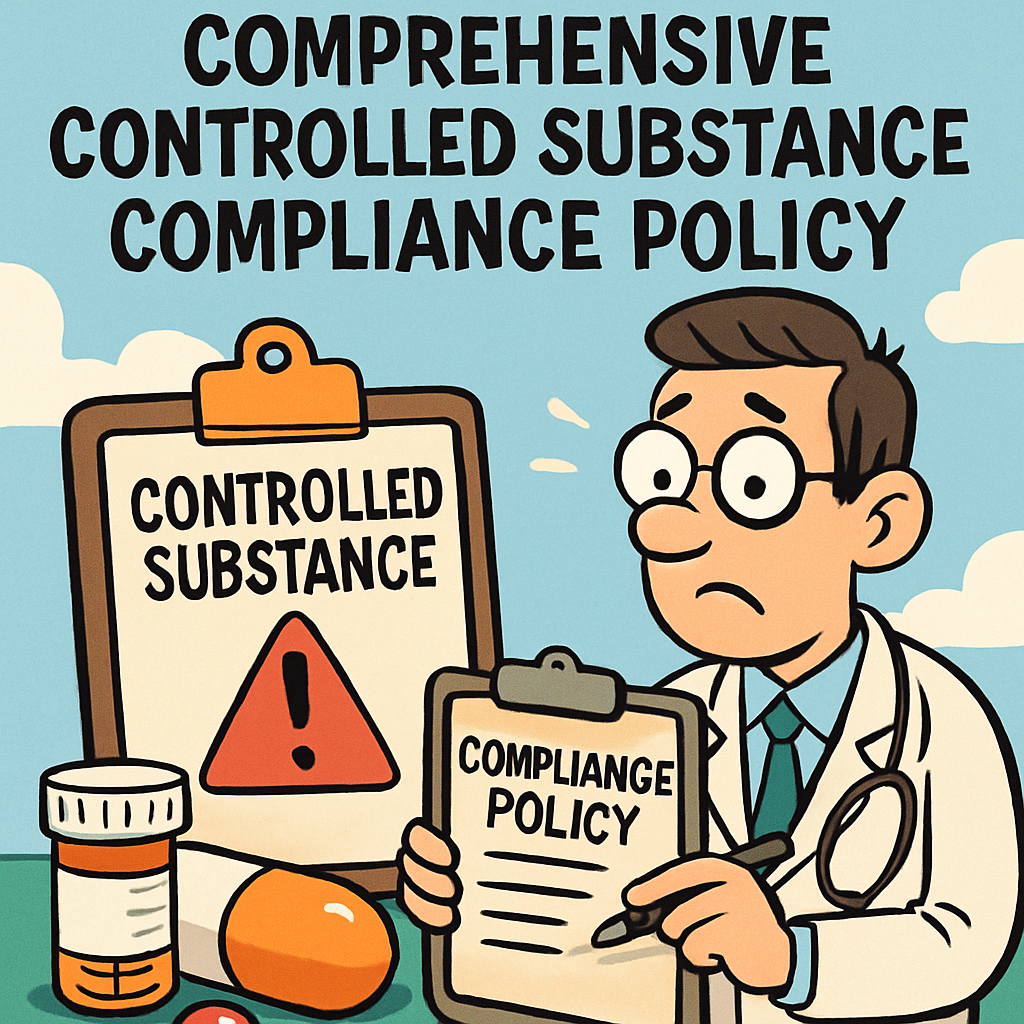
If your practice prescribes controlled substances, you need a written, comprehensive compliance policy—not just to satisfy regulators, but to guide consistent, safe, and ethical prescribing.
A policy isn’t just for show—it’s the foundation that protects your patients, your staff, and your license.
Step 1: Define the Scope and Purpose
Your policy should:
- Outline why the policy exists (patient safety, diversion prevention, regulatory compliance).
- Identify who it applies to (providers, staff, patients).
- Cover all aspects of controlled substance prescribing, monitoring, and enforcement.
Step 2: Core Sections Every Policy Should Include
- Prescribing Guidelines
- Which medications fall under the policy (i.e.: Does your state have medical cannabis?).
- Criteria for initiating therapy.
- Dose limits and escalation protocols, where applicable.
- Which medications fall under the policy (i.e.: Does your state have medical cannabis?).
- Patient Enrollment Requirements
- Use of Controlled Substance Agreements (CSAs).
- Baseline PMP check, urine drug test, and medical history review.
- Use of Controlled Substance Agreements (CSAs).
- Ongoing Monitoring Standards
- PMP review frequency.
- Urine drug testing schedules by risk category.
- Random and scheduled pill counts.
- PMP review frequency.
- Patient Education Standards
- Safe use, storage, and disposal counseling.
- Risks of diversion and overdose.
- Safe use, storage, and disposal counseling.
- Violation Response Protocols
- Types of violations and their consequences.
- Process for addressing abnormal UDTs, PMP findings, or missed pill counts.
- Types of violations and their consequences.
- Documentation Requirements
- What to record for each prescribing and monitoring activity.
- Timelines for completing documentation.
- What to record for each prescribing and monitoring activity.
- Staff Roles and Responsibilities
- Clear definition of duties for providers, nurses, MAs, and administrative staff.
- Clear definition of duties for providers, nurses, MAs, and administrative staff.
- Reporting Obligations
- DEA and state reporting requirements for loss, theft, or diversion.
- DEA and state reporting requirements for loss, theft, or diversion.
Step 3: Make It Usable, Not Just Legal
- Avoid burying staff in complex legal language—write in plain English.
- Use flowcharts and checklists for quick reference.
- Make it easy to follow during the pressure of a busy clinic day.
Step 4: Train and Retrain
- Provide initial training for all staff upon hire.
- Conduct annual refreshers or when regulations change.
- Include case studies to help staff apply policy in real-world scenarios.
Step 5: Audit for Compliance
- Perform regular internal audits to ensure the policy is being followed.
- Review PMP usage, UDT compliance rates, and documentation accuracy.
- Use audit findings to update policies and training.
Step 6: Keep It Current
- Review the policy annually.
- Update it to reflect changes in law, guidelines, or clinic operations.
- Communicate updates promptly to all staff.
Common Mistakes to Avoid
- Borrowing another practice’s policy without tailoring it – Regulations and workflows differ.
- Writing a policy that’s too complex to follow – Simplicity encourages compliance.
- Not training staff on policy details – A policy no one knows is useless.
- Failing to enforce it – A policy without enforcement erodes credibility.
Benefits of a Comprehensive Policy
- Clear guidance for all providers and staff.
- Consistent patient care and monitoring.
- Reduced risk of diversion, misuse, and regulatory penalties.
- Strong defense in case of audit or investigation.
Final Thoughts: Build It Before You Need It
A well-written controlled substance compliance policy isn’t just a regulatory safeguard—it’s a daily operational guide that supports safe prescribing and strengthens trust with patients, staff, and regulators.
In compliance, clarity is protection. Your policy should leave no room for doubt.
About the Author
Douglas J. Jorgensen, DO, CPC, FAAO, FACOFP
Dr. Doug is a physician, consultant, and national educator on healthcare compliance, controlled substance management, and policy development. He helps practices create and implement compliance programs that are both practical and audit-proof.