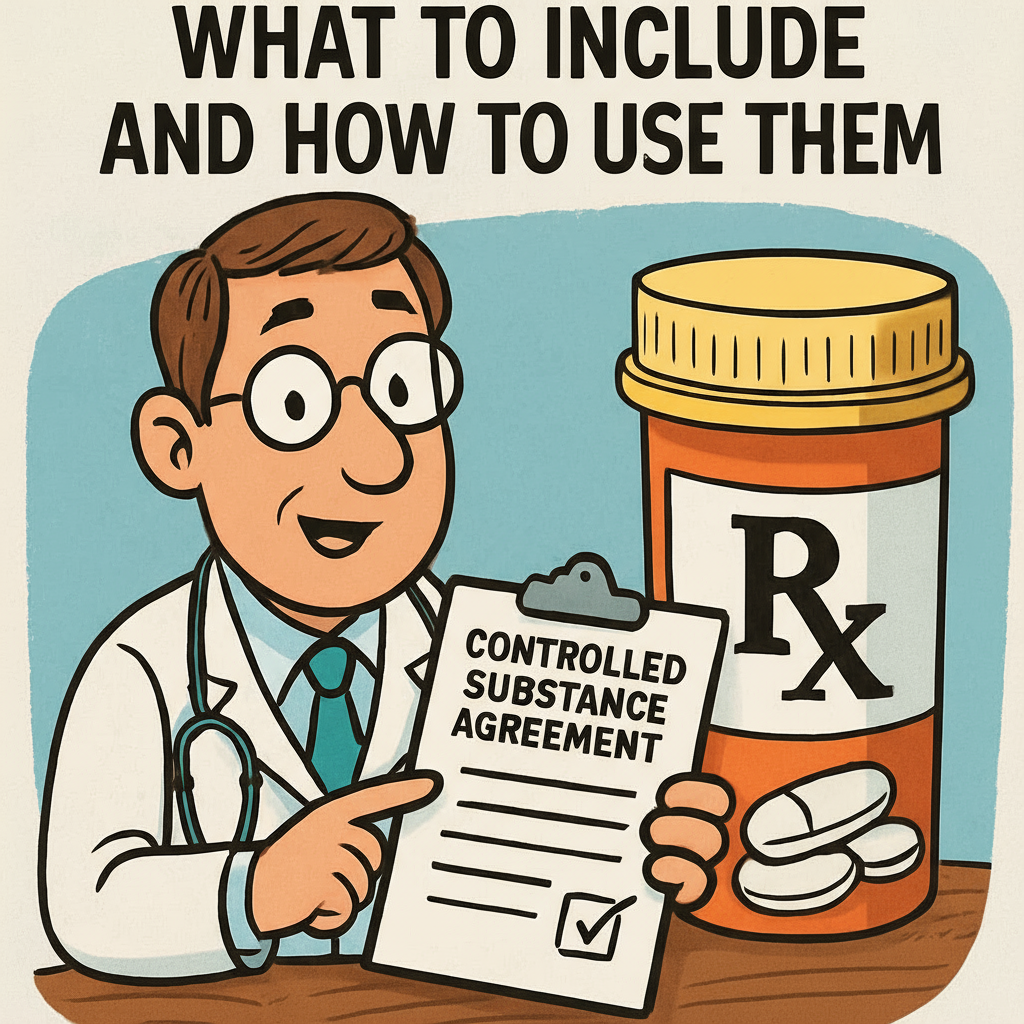
Controlled Substance Agreements: What to Include and How to Use Them

Doug Jorgensen
April 23, 2025
Introduction: Your Roadmap for Safe Prescribing
A Controlled Substance Agreement (CSA) is more than just a form—it’s a mutual understanding between provider and patient.
When written well, it sets expectations, reduces misunderstandings, and serves as a compliance anchor in your prescribing program.
A CSA is both a safety net and a communication tool—it protects patients, providers, and the community. It is important to understand that a Controlled Substance Agreement (CSA) is not a contract. Unlike a contract, which implies a mutually reciprocal relationship, the prescriber maintains full control over the mandates and functions of the CSA. This document solely serves to authorize the ongoing utilization and prescribing of controlled substances if patient compliance is maintained.
Step 1: Define the Purpose
Make it clear the agreement exists to:
- Support safe, effective treatment.
- Prevent misuse, abuse, and diversion.
- Comply with state and federal prescribing regulations.
- Protect both patient and provider from harm.
Step 2: Core Elements to Include
- Medication Details
- Name of medication(s) and why they’re prescribed.
- Dosing instructions and refill schedule.
- Name of medication(s) and why they’re prescribed.
- Patient Responsibilities
- Take medications exactly as prescribed.
- Use one pharmacy unless otherwise approved.
- Submit to PMP checks, urine drug testing, and pill counts.
- Store medications securely and never share them.
- Take medications exactly as prescribed.
- Provider Responsibilities
- Prescribe in the patient’s best interest.
- Monitor safety and effectiveness regularly.
- Provide referrals if the medication is no longer appropriate.
- Prescribe in the patient’s best interest.
- Prohibited Behaviors
- Early refill requests without approval.
- Altering prescriptions.
- Obtaining similar medications from other providers without disclosure.
- Early refill requests without approval.
- Consequences for Agreement Violations
- Increased monitoring.
- Medication taper or discontinuation.
- Referral to alternate care.
- Increased monitoring.
- Consent for Communication
- Permission to share relevant information with pharmacists, other providers, or law enforcement if required.
- Permission to share relevant information with pharmacists, other providers, or law enforcement if required.
Step 3: Make It a Two-Way Conversation
- Review the agreement in person, not just as paperwork to sign.
- Encourage patients to ask questions.
- Use plain language—avoid jargon that could confuse or intimidate.
Step 4: Document the Agreement
- Keep a signed copy in the patient’s chart.
- Provide a copy to the patient for reference.
- Reaffirm annually or sooner if treatment changes.
Step 5: Enforce Consistently
- Apply the same standards to every patient—no exceptions for “favorites.”
- If violations occur, follow the steps outlined in the agreement.
- Document each instance and your response.
Step 6: Update as Needed
- Adjust the CSA if laws change or new clinic policies are implemented.
- Add clarity if recurring issues arise that aren’t currently addressed.
Common Mistakes to Avoid
- Too Generic – A one-size-fits-all agreement may not reflect your specific policies.
- Failure to Review in Person – Patients may not understand what they’re signing.
- Inconsistent Enforcement – Undermines credibility and legal protection.
- Not Updating Annually – Outdated agreements weaken compliance.
Benefits of a Strong CSA
- Builds trust through transparency.
- Clarifies expectations for both parties.
- Provides clear documentation in case of disputes or audits.
- Enhances safety for patients and the community.
Final Thoughts: Agreements Work Best When They’re Understood
A Controlled Substance Agreement is most effective when patients understand it, agree with it, and see it as part of their care—not just a hoop to jump through.
A well-crafted CSA isn’t about control—it’s about commitment to safe, responsible care.
About the Author
Douglas J. Jorgensen, DO, CPC, FAAO, FACOFP
Dr. Doug is a physician, consultant, and national educator on healthcare compliance and risk mitigation. He helps providers create effective CSAs that improve patient safety while meeting regulatory requirements.