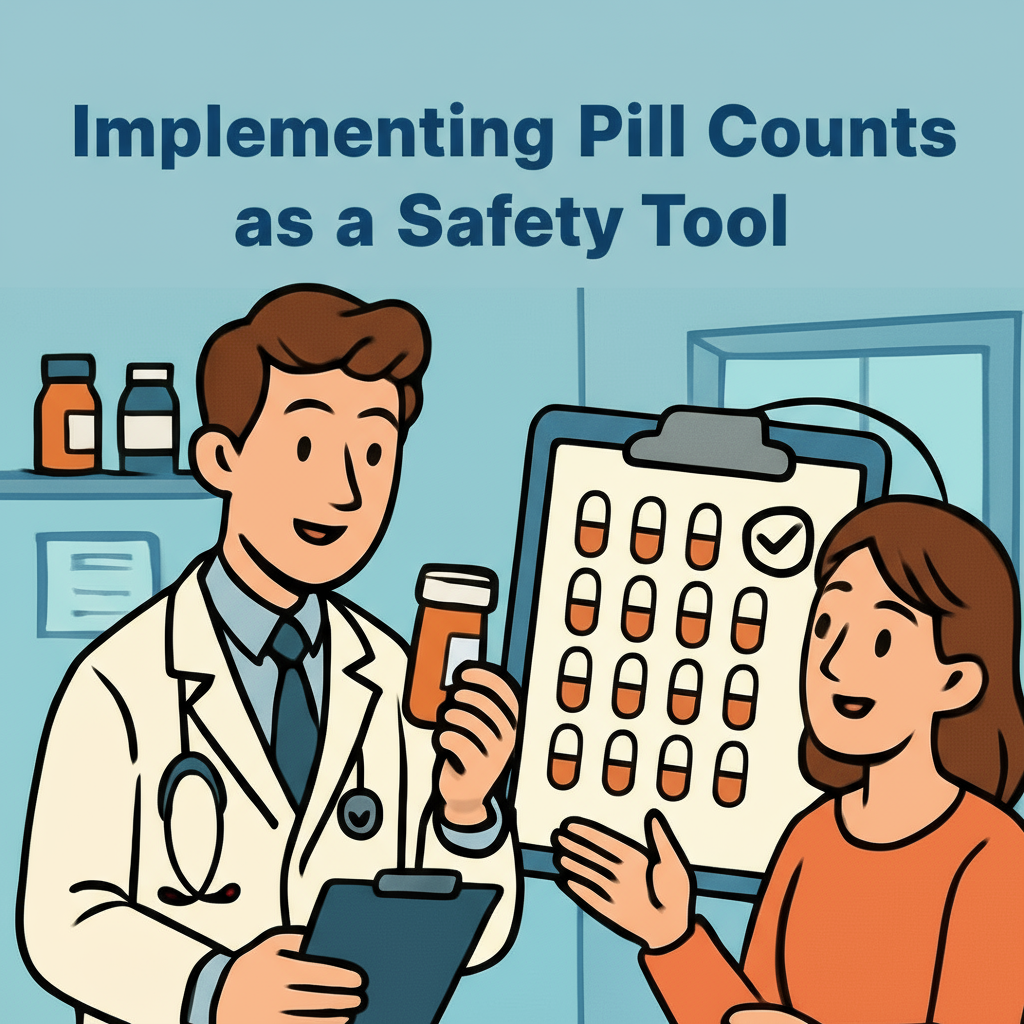
Implementing Pill Counts as a Compliance and Patient Safety Tool

Doug Jorgensen
April 21, 2025
Introduction: Simple, Direct, and Highly Effective
Pill counts are one of the most straightforward tools in the controlled substance compliance toolkit.
When done correctly, they provide immediate insight into adherence, potential misuse, and diversion risks.
A pill count isn’t just about numbers—it’s about verifying the integrity of the treatment plan.
Step 1: Define When to Use Pill Counts
- Random checks – Most effective for detecting diversion or misuse.
- Scheduled follow-ups – To reinforce patient accountability.
- Triggered by concerns – PMP irregularities, early refill requests, or abnormal UDT results.
- As part of high-risk protocols – For patients on high-dose or multiple controlled substances.
Step 2: Communicate Expectations Early
- Include pill count requirements in the controlled substance agreement. “All prescriptions are to be brought with you to every appointment for potential pill count.”
- Explain the purpose: patient safety, regulatory compliance, and community protection.
- Let patients know counts may be unscheduled to ensure accuracy and if called to come in for a pill count or UDT, it is part of compliance with the controlled substance agreement.
Step 3: Establish a Standard Procedure
- Notify the patient—For random counts, allow minimal notice (often 24 hours or less).
- Count in person—Preferably in the clinic, with a staff witness present. Always have two staff doing the pill counts.
- Use gloves and a clean counting tray—To maintain professionalism and hygiene.
- Record details—Medication name, strength, prescribed quantity, refill date, expected quantity, actual count.
- Have both staff members sign off on the record.
Step 4: Compare Expected vs. Actual Count
- Exact match – Document as compliant.
- Slight discrepancy – Ask patient for explanation; verify against prescription instructions.
- Significant shortfall or overage – Treat as a compliance red flag and follow policy.
Step 5: Document Thoroughly
Include in the patient record:
- Date and reason for pill count.
- Expected quantity vs. actual count.
- Explanation provided by patient (if applicable).
- Any corrective actions or follow-up steps.
Step 6: Respond Consistently to Irregularities
- Confirm facts before taking action—sometimes patients misunderstand instructions or misplace doses.
- For confirmed non-compliance:
- Review treatment agreement.
- Adjust prescribing or increase monitoring.
- Consider tapering or discontinuing controlled substances if risk outweighs benefit.
- Review treatment agreement.
Step 7: Integrate With Other Monitoring Tools
- Combine pill counts with PMP checks, UDTs, and patient education for a layered approach.
- Cross-reference count results with refill history for a complete picture.
Common Mistakes to Avoid
- Failing to set expectations – Surprising patients with counts can erode trust.
- Inconsistent follow-up – Different responses for similar discrepancies weaken policy.
- Poor documentation – Without detailed notes, findings may be challenged.
- Skipping staff training – Staff should know exactly how to perform and record counts.
Benefits of Pill Counts
- Quick, low-cost compliance check.
- Deters diversion and misuse.
- Builds a stronger patient–provider partnership.
- Demonstrates proactive oversight to regulators.
Final Thoughts: An Easy Win in Compliance
Pill counts are simple to implement, inexpensive, and highly effective.
When paired with other monitoring strategies, they create a robust defense against diversion and misuse.
Sometimes the simplest tools are the most powerful.
About the Author
Douglas J. Jorgensen, DO, CPC, FAAO, FACOFP
Dr. Doug is a physician, consultant, and national educator on healthcare compliance and controlled substance policy. He helps providers integrate practical monitoring tools like pill counts into their everyday workflow.