Best Practices for Urine Drug Testing in Chronic Controlled Substance Therapy

Doug Jorgensen
April 21, 2025
Introduction: Trust, But Verify
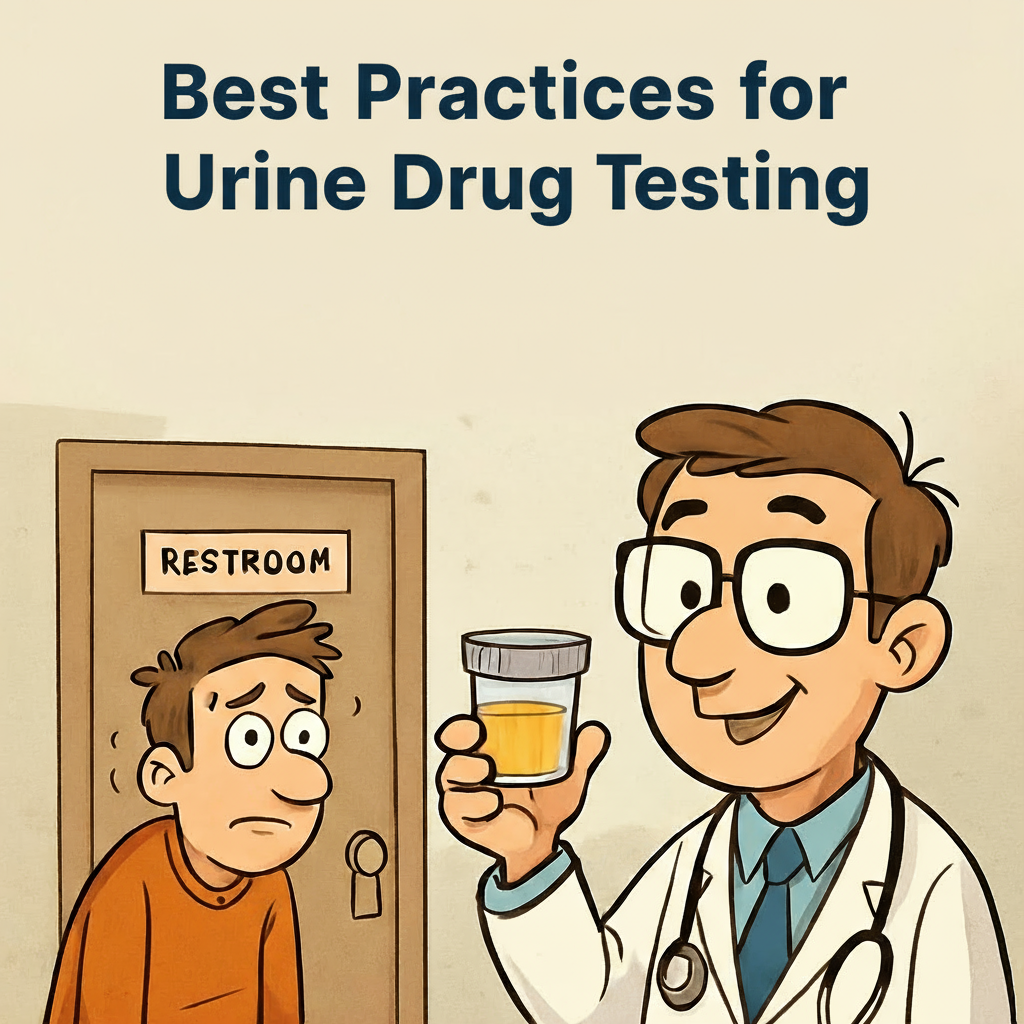
Urine drug testing (UDT) is a cornerstone of controlled substance monitoring in chronic therapy.
It protects patients, helps guide treatment, and demonstrates to regulators that you take diversion prevention seriously.
UDT isn’t about “catching” patients—it’s about protecting them, protecting your license, and ensuring safe care.
Step 1: Know Why You’re Testing
UDT serves several purposes:
- Verify adherence – Confirms the patient is taking the prescribed medication.
- Detect undisclosed substances – Identifies possible misuse or dangerous drug interactions.
- Document compliance – Shows regulators that monitoring is active and ongoing.
- Guide clinical decisions – Supports tapering, discontinuation, or referral if needed.
Step 2: Choose the Right Testing Method
- Immunoassay (IA) – Fast, inexpensive screening; may produce false positives/negatives.
- Gas Chromatography/Mass Spectrometry (GC/MS) – Gold standard for confirmation; used to verify IA results.
- LC-MS/MS – High-sensitivity alternative for confirmatory testing.
Best practice: Use IA for initial screening, confirm unexpected or critical results with GC/MS.
Step 3: Set an Appropriate Testing Frequency
Guidelines vary, but a common framework is:
- Low Risk: At least once a year. FYI: No one getting controlled substances is Low Risk.
- Moderate Risk: 4 times per year.
- High Risk (e.g., history of misuse, high doses): Every visit and no less than quarterly.
Random testing—rather than only scheduled—is more effective for detecting diversion and should be used in combination with routine urine testing.
Step 4: Prepare Patients in Advance
- Include UDT requirements in controlled substance agreements.
- Explain that testing is a standard safety measure, not a sign of distrust.
- Discuss what happens if results are unexpected or inconsistent.
Step 5: Maintain Chain of Custody
- Collect samples in a secure location with staff supervision (e.g.: observed urines) when indicated.
- Use tamper-evident containers.
- Record collection date, time, patient ID, and collector’s name/signature.
- Ensure secure transport to the lab.
Step 6: Interpret Results Carefully
- Review medication metabolism and cross-reactivity before drawing conclusions.
- False positives and negatives happen—always confirm with a definitive test before taking clinical action.
- Consider patient-specific factors (renal function, metabolism, other medications).
Step 7: Document Thoroughly
For each UDT:
- Reason for testing.
- Date and method.
- Summary of results (positive, negative, unexpected).
- Any confirmatory testing ordered.
- Follow-up plan and patient discussion.
Step 8: Respond Appropriately to Abnormal Results
- Confirm unexpected results before making treatment changes.
- Document discussion with the patient, including their explanation.
- If misuse or diversion is suspected, follow your compliance policy for next steps.
Common Mistakes to Avoid
- Testing Without a Plan – Always know how you’ll respond to various results.
- Not Confirming Unexpected Findings – Leads to false assumptions and patient mistrust.
- Poor Documentation – If it’s not recorded, it didn’t happen.
- Infrequent Testing – Inconsistent monitoring weakens compliance defense.
Benefits of Strong UDT Practices
- Improves patient safety by identifying dangerous drug use.
- Reduces diversion risk.
- Demonstrates due diligence to regulators.
- Strengthens the provider–patient trust relationship when explained properly.
Final Thoughts: UDT Is a Clinical and Compliance Tool
When done correctly, urine drug testing is not punitive—it’s protective.
It’s one of the clearest signals you can send to regulators, payers, and patients that your practice is committed to safe, responsible prescribing.
The test is only as valuable as the way you use—and document—it.
About the Author
Douglas J. Jorgensen, DO, CPC, FAAO, FACOFP
Dr. Doug is a physician, consultant, and national educator on healthcare compliance, risk mitigation, and controlled substance policy. He helps providers implement monitoring protocols that stand up to both clinical and regulatory scrutiny.