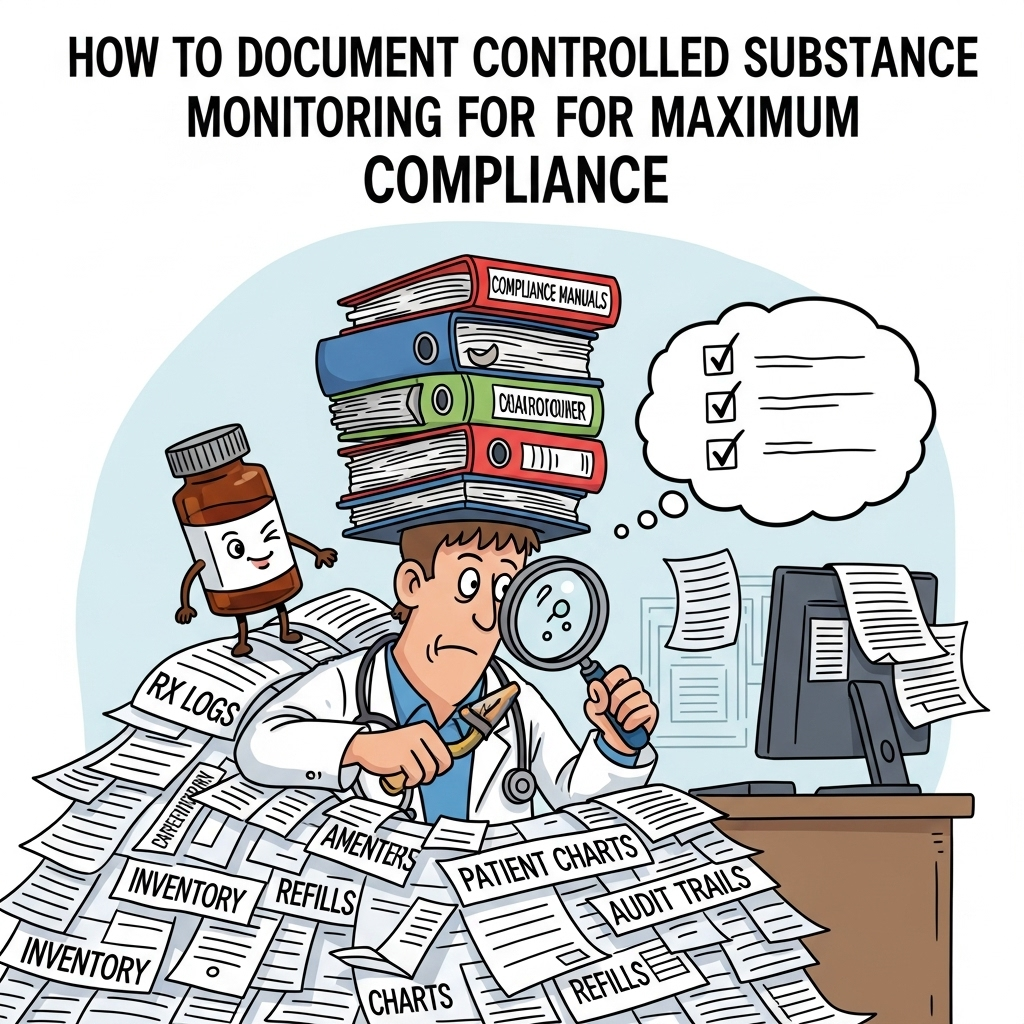
How to Document Controlled Substance Monitoring for Maximum Compliance

Doug Jorgensen
April 19, 2025
Introduction: If It’s Not Documented, It Didn’t Happen
Regulators, insurers, and boards don’t judge compliance on what you say you did—they judge it on what’s in the record.
When it comes to controlled substance monitoring, documentation is your shield against audits, investigations, and legal challenges.
Good documentation isn’t about writing more—it’s about writing the right things.
Step 1: Document Every Monitoring Activity
Core monitoring tools and what to note:
Prescription Monitoring Program (PMP) Checks
- Date and time checked.
- Name of person who performed the check.
- Summary of findings (e.g., “No additional prescribers, no early refills found”).
Urine Drug Tests (UDT)
- Date of collection.
- Type of test (immunoassay, confirmatory GC/MS).
- Result summary (positive, negative, unexpected).
- Any patient discussion or follow-up plan.
Pill Counts
- Date of count.
- Medication name, strength, and quantity counted.
- Who performed the count and whether it matched expected usage.
Controlled Substance Agreements
- Date signed.
- Any revisions or reaffirmations.
- Notation that the agreement was reviewed with the patient.
Step 2: Be Specific and Objective
- Avoid vague notes like “PMP OK” or “UDT fine.”
- Instead, write: “PMP reviewed—no controlled substance prescriptions from other providers in past 6 months.”
- Stick to facts; avoid personal opinions unless clinically relevant.
Step 3: Link Monitoring to Clinical Decisions
- Show how monitoring results influenced care.
- Example: “UDT negative for prescribed oxycodone—patient counseled, medication discontinued, referred for pain management evaluation.”
- This demonstrates patient safety is your priority.
Step 4: Use Templates Wisely
- Templates can save time but should prompt for specific details.
- Avoid auto-populated language that doesn’t reflect the actual encounter.
- Regulators can spot “cookie-cutter” notes quickly.
Step 5: Document Patient Communication
- Note the education provided about safe use, storage, and disposal.
- Summarize the patient’s response, understanding, or questions.
- Record any changes to the treatment plan based on patient input.
Step 6: Keep Documentation Timely
- Enter monitoring notes on the same day the activity occurs.
- Delays create credibility gaps if records are reviewed later.
Common Mistakes to Avoid
- Overgeneralization – “All monitoring current” doesn’t prove compliance.
- Omitting Staff Names – Regulators want to know who did the check or count.
- Not Documenting Follow-Up – Abnormal results with no follow-up plan look negligent.
- Template Overuse – Repetitive, non-specific notes can undermine credibility.
Benefits of Strong Monitoring Documentation
- Defensible position during audits.
- Clear record of patient safety measures.
- Improved team communication and accountability.
- Regulatory compliance and reduced liability.
Final Thoughts: Write for the Reviewer
When you document, imagine an auditor, board investigator, or insurance medical director reading your notes.
Would they clearly see what you did, why you did it, and how it protected the patient?
If yes—you’re doing it right.
Your records are your best witness. Make them work for you.
About the Author
Douglas J. Jorgensen, DO, CPC, FAAO, FACOFP
Dr. Doug is a physician, consultant, and national educator on healthcare compliance, documentation strategy, and controlled substance policy. He helps practices build charting systems that withstand regulatory scrutiny.