
Introduction: Every Missing Pill Deserves an Answer
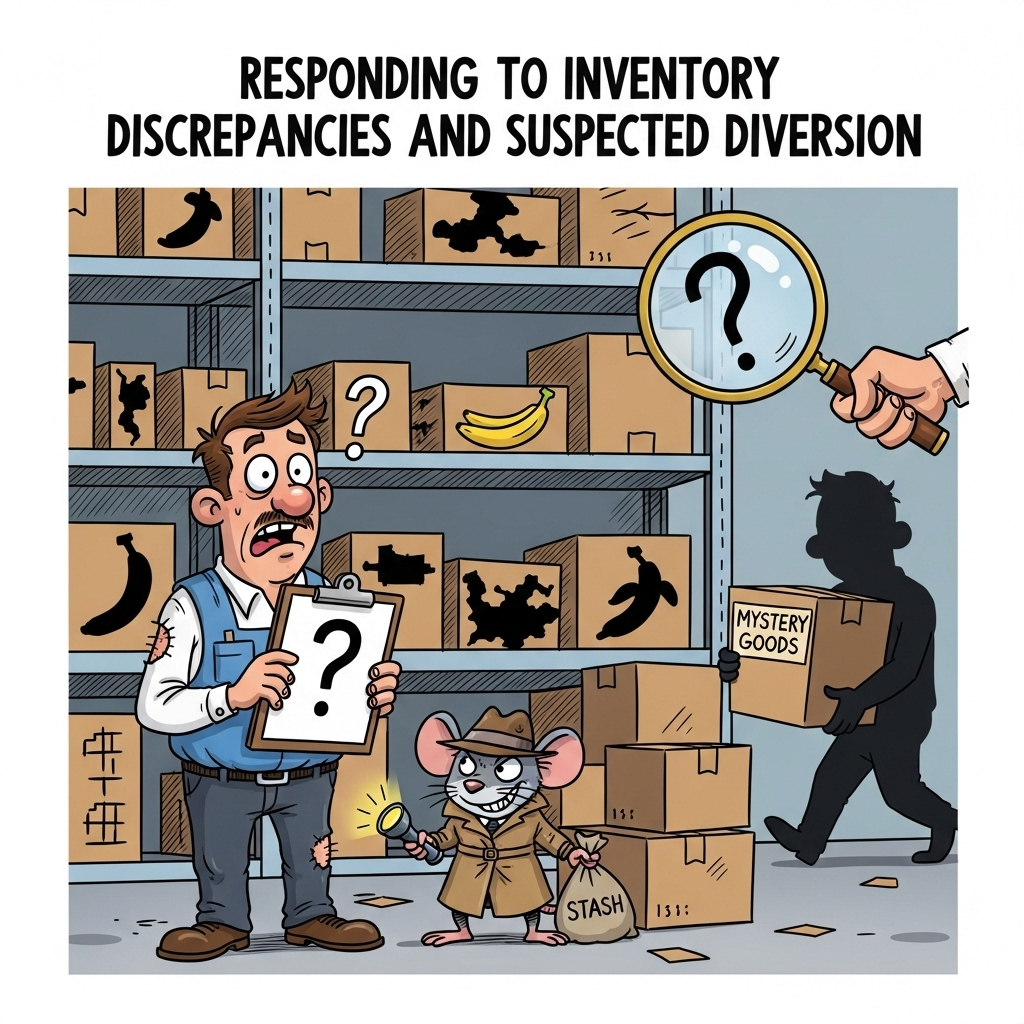
When your controlled substance count doesn’t match your log, you have a potential compliance crisis.
Whether it’s a simple documentation error or suspected diversion, your response must be swift, systematic, and well-documented.
Regulators care less about the discrepancy itself and more about how you handle it.
Step 1: Confirm the Discrepancy
- Recount Immediately – Have two authorized staff members verify the count.
- Check Logs – Look for missing entries, transposed numbers, or duplicate entries.
- Review Recent Dispensing Activity – Compare to patient records and prescriptions.
Step 2: Determine the Scope
- Is this a one-time error or part of a pattern?
- Does it involve a single medication or multiple?
- How many doses are unaccounted for?
- Has the issue occurred before with the same staff member, shift, or location?
Step 3: Document the Findings
- Record:
- Date and time discrepancy was found.
- Names of staff who discovered and verified it.
- Quantity missing or overcounted.
- Medications involved.
- Immediate actions taken.
- Date and time discrepancy was found.
- Keep this record in your compliance binder and patient or inventory logs.
Step 4: Investigate Thoroughly
- Interview Staff – Ask for any relevant observations or explanations.
- Review Surveillance Footage – If available, check the timeframe of the discrepancy.
- Audit Access Logs – Identify who accessed the storage area and when.
Step 5: Take Immediate Corrective Action
- If the cause is clerical, correct the error and retrain staff as needed.
- If theft or diversion is suspected, secure the area and limit access to essential personnel.
- Remove the involved staff member from controlled substance handling duties pending investigation.
Step 6: Report When Required
- DEA: File Form 106 within one business day if a significant loss or theft is confirmed.
- State Board of Pharmacy or Medical Board: Many states have their own reporting requirements—check yours.
- Local Law Enforcement: In some cases, theft must be reported to police.
Step 7: Implement Preventive Measures
- Increase count frequency temporarily.
- Strengthen access controls.
- Add two-person verification for all transactions.
- Conduct refresher training on inventory policies.
Common Mistakes to Avoid
- Ignoring Small Discrepancies – Every missing unit is a red flag.
- Delaying the Investigation – Gaps in time make it harder to determine the cause.
- Failing to Report – Non-reporting can carry more penalties than the loss itself.
- Punitive Overreaction – Address the issue factually without jumping to accusations.
Benefits of a Strong Response Protocol
- Protects your DEA and state compliance standing.
- Reduces the chance of repeated incidents.
- Builds staff accountability and awareness.
- Demonstrates to regulators that you take security seriously.
Final Thoughts: Treat It Like a Fire Drill
Your practice should have a pre-written, tested procedure for inventory discrepancies and suspected diversion.
When the situation arises—and it will—you’ll know exactly what to do, step by step.
The faster and more methodical your response, the more credibility you maintain with regulators.
About the Author
Douglas J. Jorgensen, DO, CPC, FAAO, FACOFP
Dr. Doug is a physician, consultant, and national educator on healthcare compliance, controlled substance security, and diversion prevention. He works with practices nationwide to create airtight protocols for handling discrepancies and suspected theft.