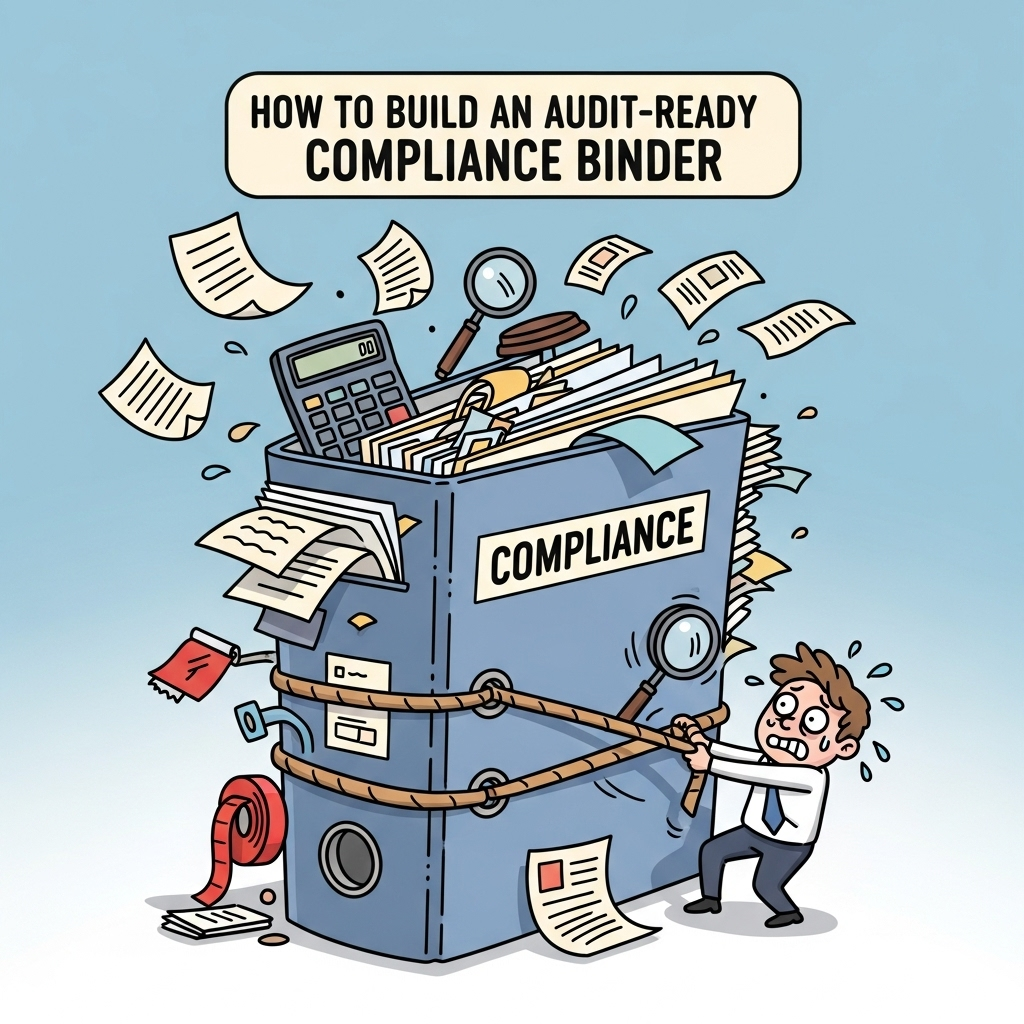
How to Build an Audit-Ready Compliance Binder

Doug Jorgensen
April 13, 2025
Introduction: Your Compliance Program, in One Place
When the DEA, state board, or insurance payer knocks on your door, the last thing you want to do is scramble for documents.
An audit-ready compliance binder is your go-to resource—organized, complete, and ready to hand over when needed.
Think of it as your practice’s “emergency briefcase” for regulatory scrutiny.
Why a Compliance Binder Matters
- Saves Time – Everything is in one place, organized for quick retrieval.
- Demonstrates Preparedness – Shows auditors you take compliance seriously.
- Protects Against Omissions – Reduces the chance you’ll forget an important document.
- Supports Internal Training – Serves as a reference for staff on policies and protocols.
Step 1: Choose Your Format
- Physical Binder – Clearly labeled sections with tab dividers; easy to hand to an auditor on site.
- Digital Binder – Secure, encrypted file structure with mirrored organization; can be shared securely if requested.
- Hybrid – Physical binder for quick access, digital backup for security.
Step 2: Core Sections to Include
1. Licenses and Registrations
- DEA registration and renewals.
- State medical license(s).
- State controlled substance registration (if applicable).
2. Compliance Policies and Procedures
- Controlled substance prescribing policy.
- Urine drug testing protocol.
- Prescription monitoring program (PMP) procedures.
- Pill count procedures.
- Termination of care policy.
3. Training Records
- Annual compliance training logs for all staff.
- Certificates of completion for relevant courses.
4. Monitoring Logs
- PMP check logs.
- UDT schedules and results (summary format, not raw lab data unless requested).
- Pill count logs.
5. Controlled Substance Agreements
- Blank copy for reference.
- Example of a completed, de-identified agreement.
6. Inventory Records (if dispensing or storing controlled substances)
- Daily/weekly inventory logs.
- Ordering and receipt records.
- Storage security checklist.
7. Audit and Self-Assessment Reports
- Internal compliance audits with corrective actions documented.
- External consultant audits, if available.
8. Communication Logs
- Records of policy updates and distribution to staff.
- Notes from compliance meetings.
Step 3: Keep It Current
- Quarterly Review – Assign a compliance officer or administrator to check for expired documents, outdated policies, or missing records.
- Version Control – Date and archive old versions of policies; never overwrite without keeping a history.
- Real-Time Updates – Add new training records, licenses, and logs as they are created.
Step 4: Prepare for Auditor Use
- Tab and Label Clearly – Make it easy for an auditor to find what they need.
- Remove Irrelevant Materials – Keep the binder focused on compliance; don’t clutter it with unrelated items.
- Have a Summary Sheet – First page should list sections with a brief description of what each contains.
Step 5: Train Staff on Binder Access
- All staff should know who is authorized to present the binder during an audit.
- Train your designated staff to walk an auditor through it calmly and confidently.
Common Mistakes to Avoid
- Outdated Information – Expired licenses, old policies, or missing logs undermine credibility.
- Overstuffing – Too much irrelevant information slows down retrieval.
- No Backup – If the binder is lost or damaged, you must have a secure duplicate.
Benefits of an Audit-Ready Binder
- Reduces audit stress.
- Improves the perception of your compliance program.
- Speeds up the audit process.
- Serves as a continuous improvement tool.
Final Thoughts: Preparation Is Protection
An audit-ready compliance binder isn’t just for auditors—it’s for you.
It keeps your compliance program organized, defensible, and ready to present at a moment’s notice.
The time you invest now will save hours of scrambling—and potentially your license—later.
About the Author
Douglas J. Jorgensen, DO, CPC, FAAO, FACOFP
Dr. Doug is a physician, consultant, and national educator on healthcare compliance, regulatory preparedness, and controlled substance policy. He helps providers build systems that stand up to audits, investigations, and board reviews.