What to Do Immediately After Receiving a DEA Audit Notice

Doug Jorgensen
April 11, 2025
Introduction: Time to Act, Not Panic
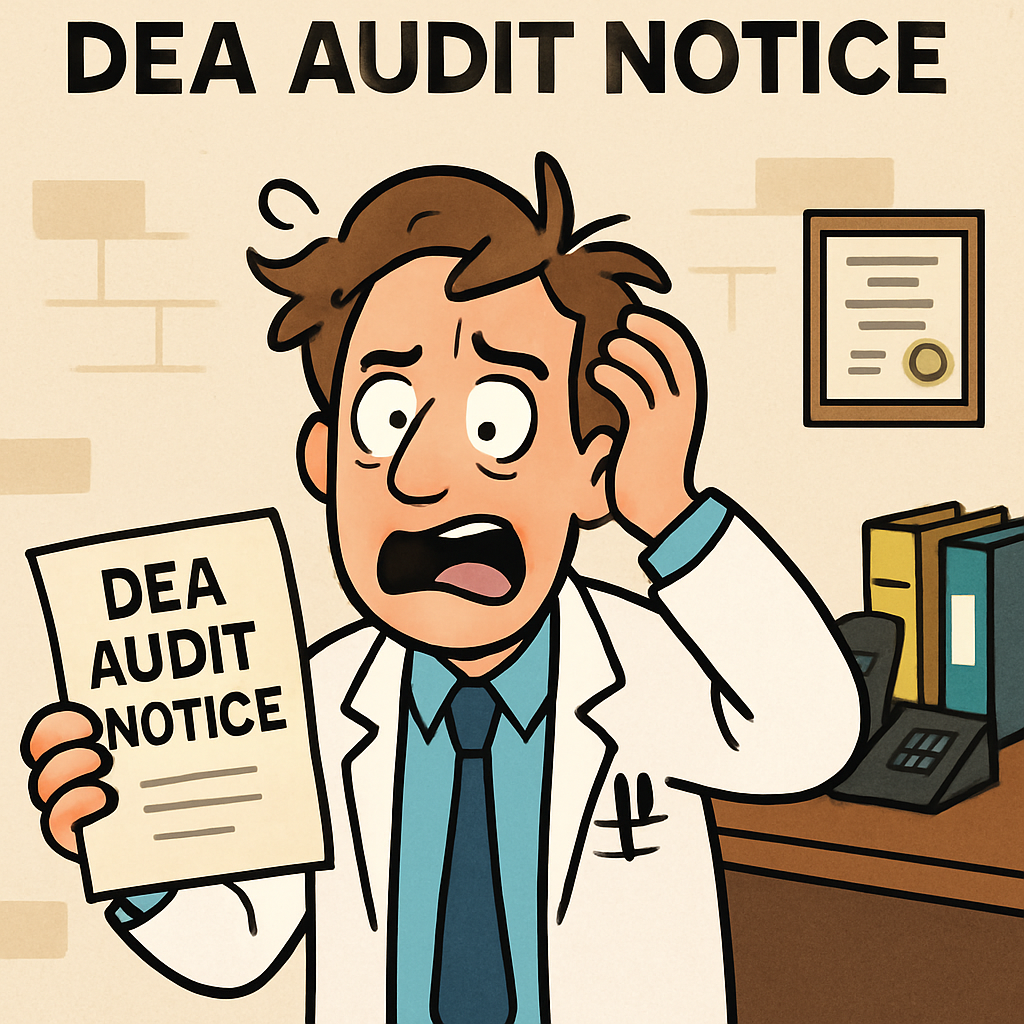
A DEA audit notice is not an accusation of wrongdoing—but it is a serious event. They aren’t usually there to commend your excellent work.
How you respond in the first 24–72 hours can determine whether the process is smooth or escalates into something more serious.
The DEA is there to ensure compliance, not to negotiate policies on the fly—your preparation and professionalism matter. They are not your ally, nor are they necessarily your adversary. However, you should never speak to them or any investigator without legal counsel present.
Step 1: Read the Notice Carefully
- Identify the Scope – Is it a routine inspection, a targeted audit, or an investigation based on a complaint? Don’t know? Call your attorney and medical malpractice carrier.
- Note the Date and Time – Confirm when the audit will take place and what records they’ve requested.
- Look for Specific Focus Areas – Such as opioid prescribing, recordkeeping, or storage of controlled substances.
Step 2: Contact Legal Counsel
- Engage an attorney experienced in DEA matters immediately. Your malpractice carrier has a list of such experts.
- Share the notice and any relevant patient or prescription records with your insurer and attorney(s).
- Your counsel can guide your preparation and be present during the audit.
Step 3: Notify Key Staff
- Alert your compliance officer or lead administrator.
- Instruct staff not to alter or destroy any records—this can trigger severe penalties.
- Limit discussions about the audit to essential personnel.
Do not discuss with your peers, the patient, staff, or alter any records to better explain patient care, prescription history, or any other details related to the investigation. Doing so will only create an appearance of guilt. If documentation is missing, collaborate with your insurer and attorney(s) to determine the best way to supplement existing records at the time of the audit or investigation.
Step 4: Gather Requested Documents
Common DEA requests include:
- Controlled substance prescribing logs.
- Copies of DEA registration certificates.
- Patient charts for selected cases.
- Inventory records and storage protocols.
- Policies and procedures for prescribing and dispensing.
Ensure records are complete, organized, and ready before the audit.
Step 5: Conduct a Quick Internal Review
- Compare your policies and records to DEA requirements.
- Identify any gaps and prepare explanations supported by clinical judgment and policy context.
- If corrective actions are needed, document that they are in progress.
Step 6: Prepare Staff for Interaction
- Instruct staff to answer only what is asked, truthfully and concisely. Your insurer will provide counsel as needed.
- Direct all audit-related questions to the designated point of contact.
- Remind staff to remain professional and cooperative at all times.
Step 7: Organize Your Audit Space
- Designate a quiet area for DEA auditors to work.
- Have all documents easily accessible.
- Ensure security measures for patient privacy (HIPAA compliance) are in place.
Step 8: During the Audit
- Have your compliance lead and counsel present.
- Keep a log of all requests made by the DEA and what was provided.
- If you don’t have something requested, state so clearly and provide a timeline for producing it—never guess or speculate.
Step 9: After the Audit
- Debrief with your team and legal counsel.
- Address any deficiencies identified—immediately document corrective actions.
- Follow up promptly on any outstanding requests from the DEA.
Common Mistakes to Avoid
- Panicking and Overreacting – Stay calm; preparation is your ally.
- Withholding Requested Information – This can be viewed as obstruction.
- Over-Explaining or Speculating – Answer only the question asked.
- Failing to Document the Process – Keep a record of what was requested, discussed, and provided.
Benefits of a Prepared Response
- Demonstrates professionalism and cooperation.
- Reduces the likelihood of further investigation.
- Improves your chances of a favorable audit outcome.
- Reinforces that your practice takes compliance seriously.
Final Thoughts: Be Ready Before the Notice Arrives
The best time to prepare for a DEA audit is long before you get the letter.
But if the notice is already in your hands, focus on organization, cooperation, and careful communication.
A calm, well-prepared response can turn a high-stress event into a manageable process.
About the Author
Douglas J. Jorgensen, DO, CPC, FAAO, FACOFP
Dr. Doug is a physician, consultant, and national educator on healthcare compliance, DEA regulations, and audit preparedness. He helps practices develop systems that withstand federal scrutiny and protect both providers and patients.