
Introduction: The Stakes Are High
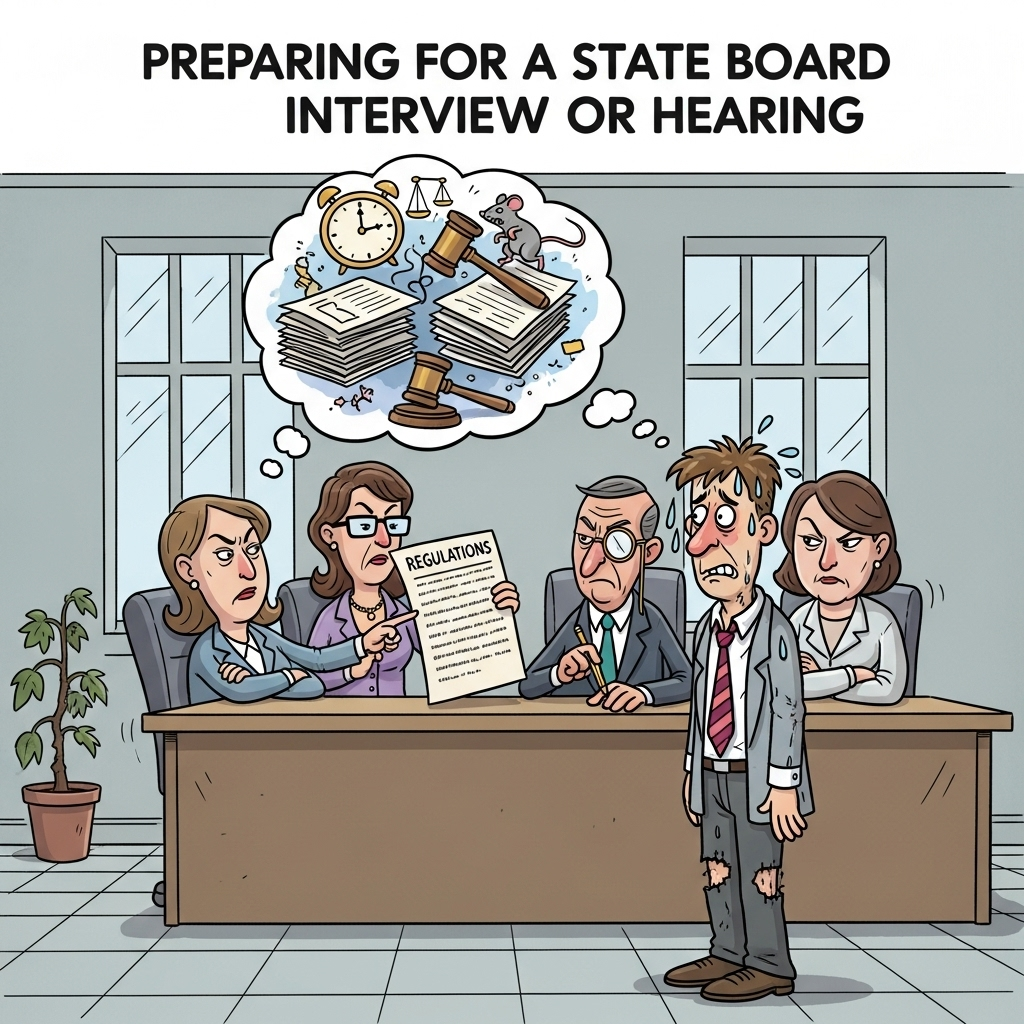
If you’ve been called before your state medical board for an interview or hearing, the outcome can significantly impact your license, reputation, and career.
Whether the issue is related to controlled substance prescribing, documentation, or patient complaints, preparation is everything.
Walking into a board interview unprepared is like walking into a deposition without knowing the questions.
Step 1: Understand Why You’re There
- Review the Notice – The board’s letter will outline the issue(s) under review.
- Identify the Scope – Is it a fact-finding interview, an informal conference, or a formal hearing?
- Know the Stakes – Possible outcomes range from no action to license suspension or revocation.
Step 2: Gather All Relevant Documentation
- Patient Records – Complete charts for any patients referenced in the case.
- Compliance Policies – Controlled substance agreements, monitoring protocols, training logs.
- Audit Results – Internal or external audits showing adherence to policy.
- Correspondence – Any communications related to the matter in question.
Step 3: Review Your Records for Gaps
- Look for missing documentation—board investigators often focus on incomplete charts.
- Be ready to explain why any deviation from policy occurred and how it was addressed.
- Ensure your reasoning is supported by clinical judgment and policy alignment.
Step 4: Prepare Your Talking Points
- Stay Fact-Based – Avoid speculation or emotional responses.
- Frame in Terms of Patient Safety – Emphasize that your decisions prioritized safety and compliance.
- Acknowledge, Don’t Defend Blindly – If a mistake occurred, acknowledge it and explain corrective measures.
Step 5: Practice Your Responses
- Conduct a mock interview with legal counsel or a compliance consultant.
- Anticipate tough questions:
- “Why did you prescribe this dosage?”
- “Why was there no urine drug test in this time frame?”
- “Why did you deviate from standard protocols?”
- “Why did you prescribe this dosage?”
- Practice answering concisely, without volunteering unnecessary information.
Step 6: Bring Representation
- Legal Counsel – Ideally, one experienced in medical board cases.
- Compliance Expert – Can provide context for your policies and procedures.
- Their presence ensures you don’t inadvertently harm your case.
Understand Your Rights: Board meetings are often public record. You can frequently request an executive session to discuss your case privately, which prevents the details from becoming public. In today’s society, accusations can be as damaging as convictions or formal board findings.
Step 7: Mind Your Demeanor
- Boards are as much assessing professionalism as they are reviewing facts.
- Be respectful, calm, and attentive.
- Avoid arguing or appearing dismissive.
Step 8: Follow Up After the Interview
- If the board requests additional documents, provide them promptly.
- Keep your counsel informed of all communications.
- Implement any corrective actions discussed—document them thoroughly.
Common Mistakes to Avoid
- Showing Up Unprepared – Not knowing your own records or policies.
- Being Defensive – Arguing with board members rarely works in your favor.
- Minimizing the Issue – Boards expect providers to take concerns seriously.
- Failing to Show Improvement – If issues were found, demonstrate concrete corrective steps.
Benefits of Being Well-Prepared
- Increases the likelihood of a favorable outcome.
- Demonstrates professionalism and accountability.
- Shows the board you take compliance seriously.
- Helps protect your license and reputation.
Final Thoughts: Control What You Can
You can’t control the questions you’ll be asked, but you can control how you prepare and respond.
Preparation, professionalism, and a patient-safety focus are your best tools in any board proceeding.
The more prepared you are, the more confident and credible you’ll be.
About the Author
Douglas J. Jorgensen, DO, CPC, FAAO, FACOFP
Dr. Doug is a physician, consultant, and national educator on healthcare compliance, medical board preparation, and provider defense strategies. He has advised numerous providers facing board inquiries, helping them prepare effectively and present their case with confidence.