
Introduction: The State Board as Your Primary Regulator
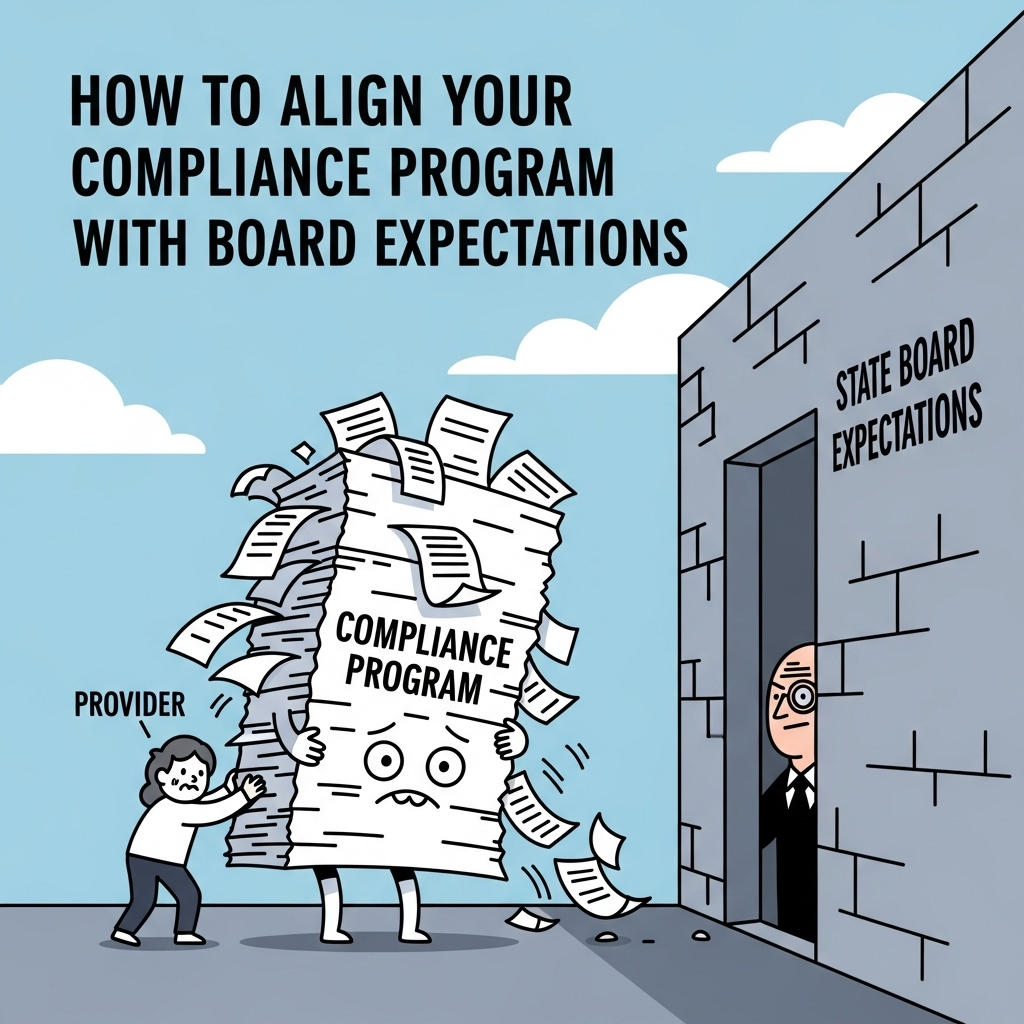
When it comes to controlled substance prescribing, your state medical board is the most immediate and impactful regulator you’ll deal with.
DEA rules matter, but boards set the tone for how compliance is interpreted and enforced locally.
If your compliance program aligns with your state board’s expectations, you’re already ahead of the game.
Why State Board Alignment Is Critical
- Local Authority – Boards have the power to investigate, discipline, suspend, or revoke licenses.
- Practical Interpretation – They apply state laws and regulations in real-world contexts.
- Public Protection Mandate – Their primary mission is patient safety, not provider convenience.
- Precedent-Driven – Board decisions and disciplinary actions create informal standards.
Step 1: Know Your Board’s Standards
- Review state laws and administrative rules on prescribing and recordkeeping.
- Read your board’s guidelines, position statements, and FAQs on controlled substances.
- Follow board disciplinary case summaries to see common pitfalls and enforcement trends.
Step 2: Integrate Standards Into Policy
- Mirror Language – Use the same terminology the board uses in your written policies.
- Address All Requirements – For example, if the board specifies quarterly urine drug testing for certain patients, make that explicit in your policy.
- Include Documentation Requirements – Boards often stress what must appear in the patient chart to support prescribing decisions.
Aim to surpass minimum requirements. Consider national standards that exceed your board’s suggestions or policies.
Step 3: Train Your Staff on Board Expectations
- Conduct annual training on state board rules and updates.
- Include front desk, nursing, and administrative staff—they all play a role in compliance.
- Role-play patient scenarios that could lead to board complaints.
Step 4: Proactively Monitor for Compliance
- Self-Audits – Review a sample of controlled substance charts quarterly.
- Policy-Procedure Matching – Make sure what’s written is what’s happening.
- Corrective Action Plans – Address any gaps immediately.
Step 5: Prepare for Board Inquiries Before They Happen
- Maintain a compliance binder with:
- Written policies and procedures.
- Staff training records.
- Self-audit results and follow-up actions.
- Written policies and procedures.
- Be ready to produce patient charts that show full adherence to board requirements.
Step 6: Learn From Disciplinary Trends
- Many boards publish annual disciplinary reports.
- Identify patterns—common violations often involve documentation gaps, inadequate monitoring, or exceeding recommended dosages without clear justification.
Step 7: Build a Relationship With the Board
- Attend public board meetings or webinars to stay informed.
- Engage respectfully if you have policy questions—clarifying ahead of time can prevent violations later.
- Avoid adversarial interactions; professionalism builds credibility.
Common Mistakes to Avoid
- Copying Policies From Another State – Regulations differ significantly from state to state.
- Ignoring Informal Guidance – Board “recommendations” often become de facto expectations.
- Overlooking Non-Clinical Requirements – Boards also care about how you handle complaints, record retention, and staff training.
Benefits of Alignment
- Reduces the risk of disciplinary action.
- Improves audit and investigation outcomes.
- Builds a defensible position if your prescribing is questioned.
- Demonstrates a proactive commitment to patient safety.
Final Thoughts: Make the Board Your Benchmark
Your compliance program should be built with the state board’s playbook in hand.
If you can confidently show that your policies, procedures, and documentation match board expectations, you’re positioned to practice safely—and to defend your license if challenged.
Don’t just meet the board’s standards—make them the foundation of your daily operations.
About the Author
Douglas J. Jorgensen, DO, CPC, FAAO, FACOFP
Dr. Doug is a physician, consultant, and national educator on healthcare compliance, regulatory alignment, and controlled substance policy development. He helps providers create systems that satisfy both clinical needs and regulatory demands.